
Common Automatic Gate Opener Problems & How to Fix Them
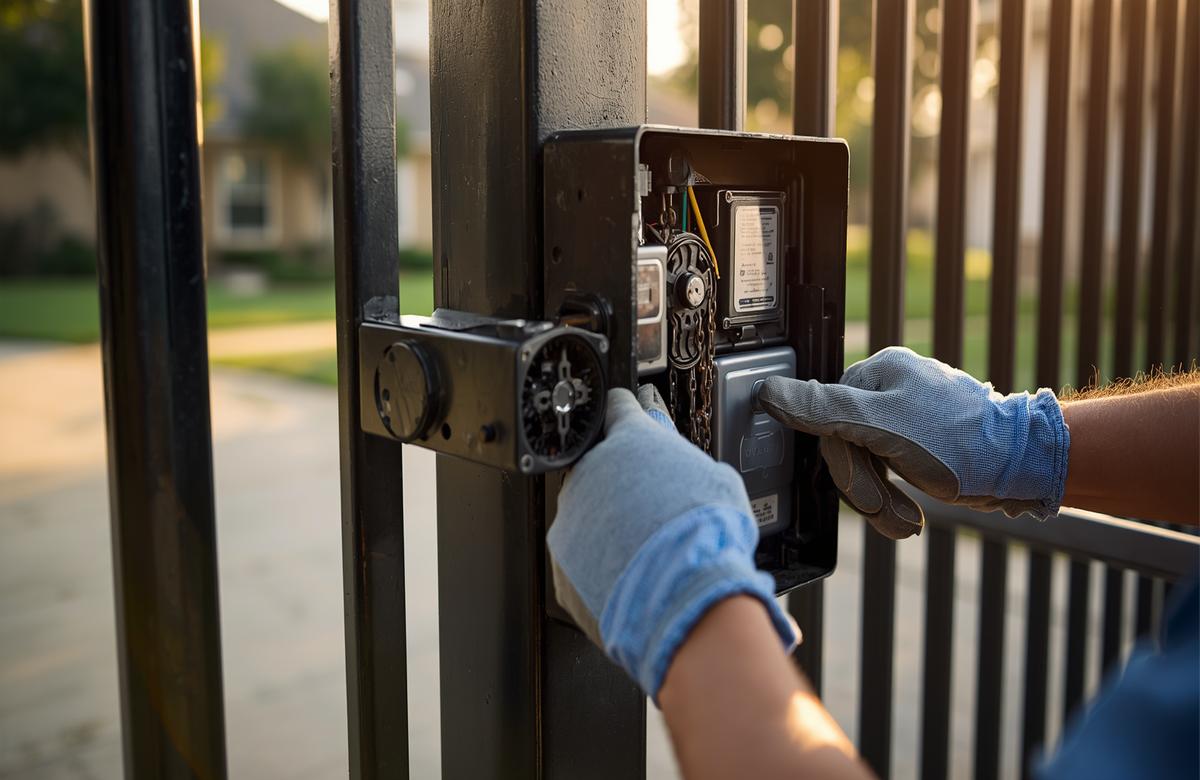

Automatic gate opener problems are more common than most people think. One day your gate works fine — the next it won’t open, won’t close, or starts acting strange for no clear reason. At Austin Gate Repair, we get calls about this all the time. The good news is that a lot of these issues have simple causes. This guide walks you through the most common ones and what you can actually do about them.
Why Automatic Gate Opener Problems Happen in the First Place
Automatic gate openers have a lot of moving parts — motors, sensors, remotes, wiring, batteries. Any one of them can cause trouble. And when one thing goes wrong, the whole system usually feels it.
Most of the time it comes down to the same few things. Power issues, dirty sensors, worn-out parts, or just regular wear that nobody dealt with. Knowing what to look for saves you a lot of time — and a lot of money. Some fixes you can handle yourself. Others need a professional — and knowing the difference matters.
Most Common Automatic Gate Opener Problems
1. Gate Won’t Open or Close
This is the most common complaint we hear. You press the remote or punch in the code, and nothing happens. Before assuming the worst, check these first:
- Power supply — Is the opener getting power? Check the circuit breaker and make sure the unit is plugged in or wired correctly.
- Remote battery — A dead remote battery causes more “gate emergencies” than anything else. Swap it out before anything else.
- Safety sensors — If they’re blocked or out of alignment, the gate won’t move. Check the sensor path first — clear out any dirt, leaves, or debris.
If that doesn’t fix it, the motor or control board might be the issue. That’s when it’s time to call someone in.
2. Gate Opens But Won’t Close
Your gate opens fine, but refuses to close all the way — or closes halfway and reverses back. This is almost always a sensor issue.
Safety sensors are supposed to stop the gate when something is in the way. The problem is they can also get confused — dirt, bad alignment, or direct sunlight can make them act like something’s blocking the gate when there’s nothing there at all.
Wipe them down with a dry cloth. Then check they’re aimed at each other properly. See that indicator light? If it’s blinking or off, they’re not aligned. Move them around until the light stays on steady.
3. Gate Opens or Closes Too Slowly
A slow gate usually points to one of two things — the motor is having trouble, or there’s friction building up somewhere in the system.
Start with the tracks and rollers. Dirt and debris pile up and put extra strain on the gate. Clean the track, lubricate the parts. Still slow after that? Could be a worn motor or the gate is out of alignment. For sliding gate repair issues, the track is always the first thing to look at.
4. Remote Not Working
You press the remote, and nothing happens — but the gate works fine from the keypad or wall switch. This points directly to the remote itself.
Start simple:
- Replace the battery
- Re-sync the remote to the opener (check your opener manual for steps)
- Check if other remotes work — if they do, the problem is just that one remote
If no remotes work but the keypad does, the receiver on the opener may be faulty. That’s when you need a professional gate opener repair service — we’ll sort it out properly.
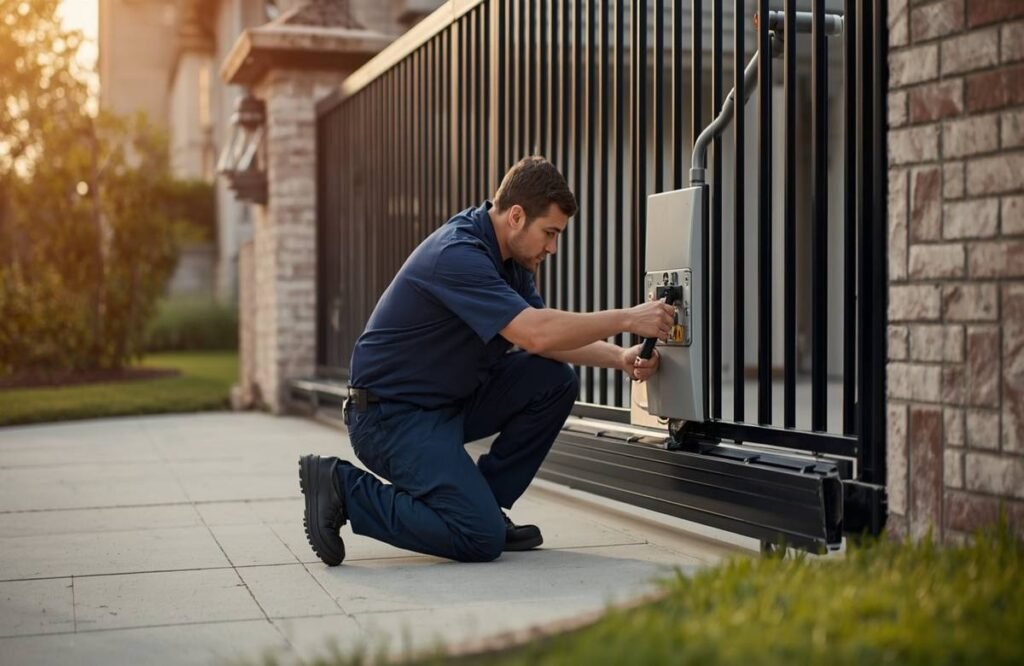
5. Gate Makes Loud or Unusual Noises
Grinding, squeaking, or banging noises during operation are a sign that something isn’t right. These sounds usually come from:
- Dry or worn-out hinges and rollers
- Loose hardware rattling during movement
- A chain or belt that’s slipping or too tight
- Debris caught in the track
Lubricate the hinges, rollers, and chain. Tighten any loose bolts. Clear the track. If the noise continues after that, the issue is likely internal — worn gears or a failing motor — and needs professional attention.
6. Gate Reverses Before Fully Closing
The gate starts to close, gets most of the way, then reverses back open. This is a sensitivity or limit-setting issue.
Most automatic gate openers have limit switches that tell the motor when to stop. Get those settings wrong and the opener thinks something is in the way — so it reverses. Adjusting the close limit usually does the trick. — check your model’s manual for the exact steps.
If the limit settings look fine, check the sensors. A dirty or partially blocked sensor can cause the same problem.
7. Gate Opener Runs, But Gate Doesn’t Move
The motor hums and runs, but the gate sits there. This usually means the drive mechanism — the chain, belt, or gear — has broken or slipped.
This one isn’t a DIY fix. A broken drive mechanism isn’t something you fix yourself. It needs someone who actually knows the system to look at it and replace what’s needed. Keep running the motor without fixing it and you’ll burn it out completely — what started as a moderate repair turns into a full gate replacement.
8. Opener Trips the Circuit Breaker
If your gate opener keeps tripping the breaker, the motor is drawing more power than it should. This happens when:
- The gate is misaligned, and the motor is overworking
- The motor itself is failing
- There’s a wiring issue somewhere in the system
Don’t keep resetting the breaker and running the gate. That’s how motors burn out. Get it checked before it turns into a bigger problem.
When to Call Austin Gate Repair
Some automatic gate opener problems are easy to fix yourself — dead batteries, dirty sensors, loose bolts. But others need someone who knows these systems inside and out.
Call us when:
- The motor runs, but the gate doesn’t move
- The opener keeps tripping the breaker
- The gate is visibly off-track or leaning
- Noises continue after lubrication and cleaning
- Nothing you try makes a difference
We handle automatic gate opener problems all across Austin, TX, and nearby areas, including Manor, Round Rock, Kyle, Buda, San Marcos and more.
Most residential automatic gate openers last between 10 to 15 years with proper maintenance. Without it, that lifespan drops significantly.
Source: Fence and Gates LLC
Conclusion
Most automatic gate opener problems don’t come out of nowhere. These things don’t happen overnight. Skipped maintenance, warning signs nobody acted on, small problems left alone — they pile up. Fix things early and it’s usually quick and cheap.
Gate acting up? Not sure what’s wrong? Call Austin Gate Repair. We’ll take a look and get it sorted. Call (512) 957-4708 for a free estimate — same-day service available.