
Why Your Automatic Sliding Gate Opener Isn’t Working
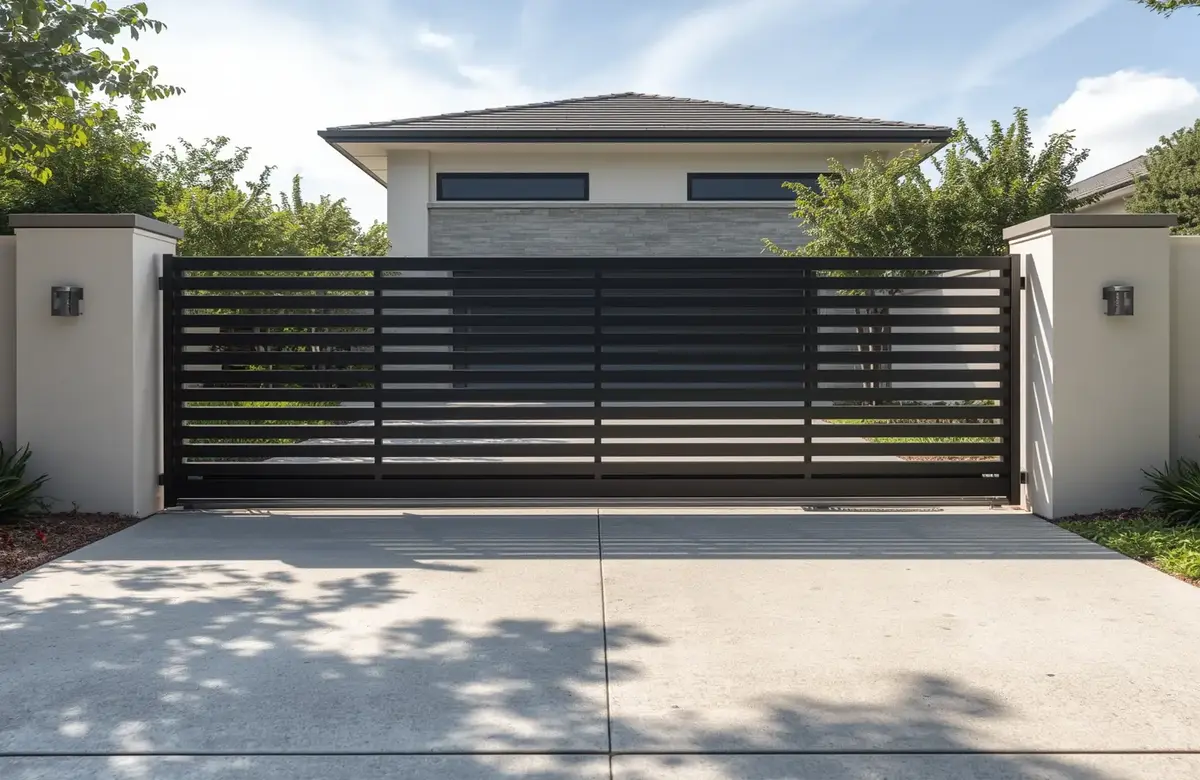

At Austin Gate Repair, we get calls about this almost every week. One question comes up more than any other: why has my automatic sliding gate opener suddenly stopped working? Most of the time, it comes down to one of five things: power, sensors, a dead remote battery, junk stuck in the track, or a motor that’s just worn out. If your gate is stuck, moving slowly, or doing nothing at all, our automatic gate repair service can usually sort it out in one visit. Below, we’ll go through each cause one by one so you can check things yourself before calling anyone.
Top Reasons an Automatic Sliding Gate Opener Stops Working
Gates doesn’t just quit for no reason. There’s almost always something small behind it, and once you know what to look for, most of these problems take five minutes to spot. Not always fixed. But spot, at least.
1. Power Supply Problems
If your automatic sliding gate opener isn’t doing anything at all — no lights, no sound, nothing — start by checking the power. It could be a tripped breaker, a blown fuse, or some loose wiring at the control box. Solar-powered gates have their own quirks too. A few cloudy days in a row can drain the battery faster than the solar panel can recharge it, especially as Austin’s daylight hours get shorter in winter.
Open the control box. Look for a blinking light. Most brands — Liftmaster, FAAC, Linear — use light patterns to tell you exactly what’s wrong. Worth keeping the manual around for this one.
2. Blocked or Misaligned Safety Sensors
Most gates have photo-eye sensors that stop the gate from closing if something’s in the way. Good safety feature. Also, one of the most common reasons an automatic sliding gate opener won’t close. Dirt, spiderwebs, fallen leaves, even sunlight hitting the lens at the wrong angle can trick it into thinking the path is blocked.
We had a job last year where the entire “malfunction” turned out to be a wasp nest sitting right on the sensor eye. So before you panic, wipe the lenses, check that both sensors are actually lined up, and try it again.
3. Dead or Faulty Remote Batteries
Obvious one, but it’s still a top call. If just one remote stopped working and the others are fine, it’s the battery, not the gate. If every remote stopped at the same time, that’s a different story — probably the receiver on the control board, and that’s where you’d want someone to come look at it properly.
4. Debris Stuck in the Track
This is a big one for a residential sliding gate opener, since these run along a ground-level track exposed to everything outside — twigs, gravel, mulch, a kid’s toy that somehow ended up there. Debris builds up slowly and creates resistance that the motor was never built to fight against. The gate might still move, just slower, jerkier, with a grinding sound that gets worse week by week.
Clean the track out, and that fixes it more often than people expect. If the grinding’s still there after, the rollers are probably worn and need replacing.
5. Worn-Out Motor or Gearbox
Motors don’t last forever. Depending on how much the gate gets used, most last somewhere around 8 to 15 years before the internal gears start going. If your automatic sliding gate opener is straining, stalling halfway, or you’re catching a burning smell near the motor housing — that’s it telling you it’s near the end. A repair might buy a bit more time. But honestly, at that point, replacing the opener is usually the better call long-term.
Quick Troubleshooting Table
| Symptom | Likely Cause | Quick Fix |
| No response at all | Power failure / dead battery | Check the breaker, fuse, or solar charge level |
| The gate won’t close | Blocked photo-eye sensor | Clean sensor lens, check alignment |
| Remote doesn’t work | Dead remote battery | Replace battery, reprogram if needed |
| Slow or jerky movement | Debris in the track | Clear track, check rollers |
| Grinding or burning smell | Worn motor or gearbox | Get a professional inspection |
| The gate reverses on its own | Obstruction sensor triggered | Check for blockage, recalibrate sensitivity |
This table covers most of the service calls we get for sliding gates across Austin, TX, Round Rock, TX, and Cedar Park, TX. Print it out and stick it inside the control box if you want — half of our regular clients do.
DIY Fix or Call a Pro?
Not everything requires a technician. Cleaning sensors, swapping a battery, or clearing debris from the track — any homeowner can handle these small tasks in about fifteen minutes. Even with automatic sliding gate repair, these quick fixes are often all that’s needed before calling in a professional.
But there’s a line. If you’re hearing grinding metal, smelling something electrical, or the gate is moving in a way that feels unpredictable, stop. Don’t keep poking at it. These gates carry real weight; some residential sliding gates run 300 to 600 pounds, and a botched repair attempt can turn into a genuine safety issue fast.
We get plenty of calls from homeowners in Manor, Buda, and Kyle whose gate got “fixed” with a YouTube tutorial, only for the same problem to come back a month later, usually worse. No shame in trying it yourself first. Just know when to stop.
Choosing the Best Automatic Sliding Gate Opener for Replacement
If your current opener is past saving, this is actually a decent opportunity to upgrade instead of just replacing like-for-like. When people ask us what the best automatic sliding gate opener is for their property, it really comes down to three things. Gate weight first — heavier wood or wrought iron gates need higher torque, which usually means a commercial-grade unit, even on a residential property. Power access matters too. If running electrical lines out to the gate isn’t realistic, a solar setup with battery backup is worth paying extra for. And then there’s the climate. Texas heat is rough on plastic housings and rubber seals, so look for something rated for high heat and a lot of UV exposure.
Liftmaster and FAAC tend to hold up well around here, in our experience. But the right pick really depends on your specific gate. If you’re unsure, we’ll walk your driveway and tell you what actually makes sense instead of guessing off a spec sheet.
Preventive Maintenance Tips
A little upkeep goes a long way here. Most of the breakdowns we fix could’ve been avoided.
- Wipe the photo-eye sensors down every couple of weeks, especially during pollen season
- Lubricate the track and rollers every 3 to 6 months
- Test the auto-reverse safety feature now and then — the gate should stop and reverse immediately if it hits resistance.
- Check the chain or belt for slack, wear, or fraying to prevent malfunctions.
- Schedule a professional gate maintenance check at least once a year, ideally before summer arrives.
If you’re managing a gate at a rental property or business entrance, this is even more important — downtime isn’t just annoying, it can leave a real security gap.
The global automatic gate opener market is projected to grow significantly over the coming years, driven by rising demand for home security and smart access systems.
Source: Grand View Research
Conclusion
A gate that won’t open isn’t just frustrating — it’s a security hole right at the front of your property. If you’ve tried everything and your automatic sliding gate opener is still giving you trouble, stop guessing and let us handle it. We’ve fixed this exact issue hundreds of times across Austin, Round Rock, San Marcos, Buda, Kyle, and Lakeway, TX, and most of the time, we can get it repaired the very same day.
Contact Austin Gate Repair to book a free estimate & same-day diagnostic, or call us at (512) 957-4708
Frequently Asked Questions
Do I need a permit for an automatic gate?
It really depends on your city and property. In most cases, standard residential gates don’t need a permit, but things like property line setbacks, gate height, corner lots, HOA rules, historic districts, or any hardwired electrical work might require approval. The safest approach is to check with your local building department before starting installation.
What is the average lifespan of an automatic gate opener?
With proper care, an automatic gate opener can last about 10–15 years for the motor and control system. The battery usually needs replacing every 3–5 years, depending on usage and, if it’s solar-powered, how much sunlight it gets. The gate itself can last much longer if it’s built well.
What is the most reliable automatic gate opener?
The most reliable system depends on your gate type, size, and usage. Look for a motor strong enough for your gate, a battery you can trust, and safety sensors that actually work. A well-made opener from a reputable brand will run smoothly for years with minimal maintenance.
What is the best electric gate opener?
The best electric gate opener varies depending on your needs. Choose one that matches your gate type (swing, sliding, or solar), has a durable motor, reliable safety sensors, and comes from a trusted brand. Proper installation and regular maintenance are just as important as the model itself.
How much does automatic sliding gate repair cost?
The cost of automatic sliding gate repair depends on the issue. Simple fixes like sensor adjustments or track cleaning are cheaper, while motor or control board replacements cost more. A professional inspection gives the best estimate.