
How to Lubricate a Gate | Expert Gate Maintenance Guide
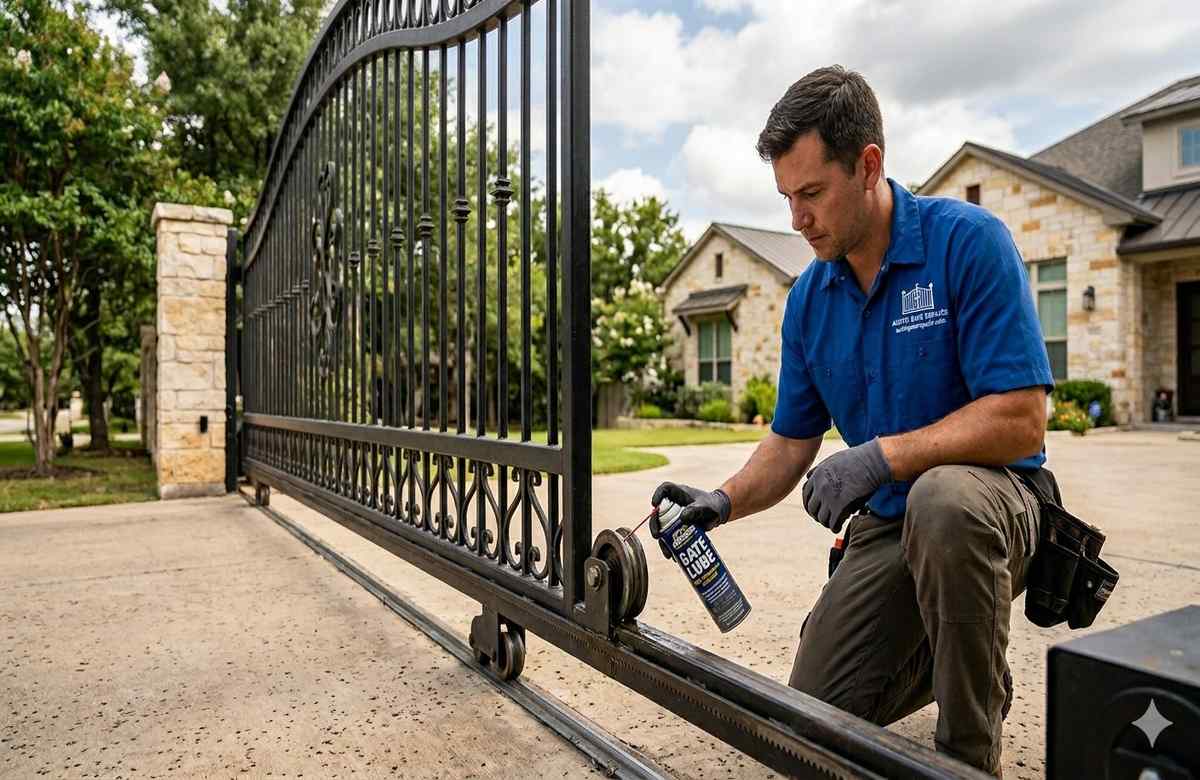

A gate that squeaks every time it opens, moves more slowly than it used to, or struggles to close properly is often trying to tell you something. In many cases, the problem isn’t a broken motor or a worn-out gate; it’s simply a lack of lubrication. Like any mechanical system with moving parts, gates need regular maintenance to continue operating safely and efficiently.
Many homeowners don’t think about lubricating their gate until it starts making noise or develops a problem. Unfortunately, waiting too long can increase friction between moving parts, accelerate wear, and place unnecessary strain on the opener. Over time, what could have been prevented with a few minutes of routine maintenance may turn into an expensive repair.
Learning how to lubricate a gate is one of the easiest ways to extend its lifespan and improve daily performance. Whether you own a sliding gate, swing gate, automatic driveway gate, or electric security gate, proper lubrication helps reduce wear, protects metal components from corrosion, and allows the entire system to operate more smoothly.
At Austin Gate Repair, we’ve serviced hundreds of residential and commercial gates throughout Austin and the surrounding areas. One thing we’ve learned is that many repair calls could have been avoided with regular maintenance. We’ve seen gates that needed nothing more than fresh lubricant on the hinges or rollers, while others were left untreated until worn components caused more extensive damage.
In this guide, we’ll explain how to lubricate your gate correctly, which products work best, the common mistakes to avoid, and when it’s time to seek professional gate maintenance services.
Why Proper Gate Lubrication Matters
Every time your gate opens or closes, dozens of moving components work together to create smooth movement. Hinges rotate, rollers travel along tracks, chains move across sprockets, and automatic openers pull or push the gate into position. Without proper lubrication, these components create friction every time they move.
Friction is one of the biggest causes of premature wear in any mechanical system. As metal parts rub against one another, they gradually wear down, producing the squeaking, grinding, and resistance that many homeowners mistake for major mechanical failures. Over time, increased resistance forces the gate opener to work harder, placing additional strain on the motor, gears, and electrical components.
Regular lubrication creates a protective barrier between moving metal surfaces. Instead of grinding against each other, components move freely with less resistance, reducing wear while helping the gate operate more quietly and efficiently.
Lubrication also helps protect exposed metal from moisture. Although Austin is known for its hot summers, the area also experiences heavy rain, humidity, and seasonal storms that can encourage corrosion. Applying the correct lubricant helps repel moisture, minimise rust, and extend the lifespan of critical components such as hinges, rollers, and chains.
Routine maintenance offers another important benefit: it allows you to identify developing problems before they become serious. While lubricating your gate, you may notice loose bolts, cracked rollers, worn hinges, or damaged tracks that would otherwise remain hidden until the gate begins to fail.
The Door and Access Systems Manufacturers Association (DASMA) recommends regular inspection and maintenance of gate systems to help ensure safe and reliable operation. Following a consistent maintenance schedule can also extend the lifespan of moving components.
Simply put, spending a little time maintaining your gate today can help you avoid unexpected breakdowns and costly repairs in the future.
What You’ll Need to Lubricate a Gate Properly
Before applying any lubricant, it’s worth gathering the right tools and products. Using the correct lubricant is just as important as applying it properly. The wrong product can attract dirt, damage certain components, or fail to provide long-lasting protection.
The table below outlines the items most professionals recommend when performing routine gate maintenance.
| Item | Purpose |
|---|---|
| White lithium grease | Ideal for hinges, chains, pivot points, and metal joints |
| Silicone spray lubricant | Best for rollers, sliding gate tracks, and rubber components |
| Soft cloth | Removes dust, moisture, and excess lubricant |
| Stiff nylon brush | Cleans old grease, rust, and built-up debris |
| Protective gloves | Keeps hands clean while handling lubricants |
Using quality products helps ensure lubrication lasts longer and provides better protection against wear and corrosion.
Should You Use WD-40 on Your Gate?
This is one of the questions we hear most often.
The short answer is no, not as your primary lubricant.
Many people reach for WD-40 because it’s readily available, but it’s important to understand what it was designed to do. WD-40 is primarily a water-displacing and penetrating product. While it can temporarily loosen stuck components and remove moisture, it does not provide the long-lasting lubrication needed for gate hinges, rollers, or opener chains.
For most gate systems, white lithium grease is the preferred choice for metal-to-metal contact points because it stays in place and continues protecting moving parts over time. Silicone spray is generally recommended for sliding gate tracks, rollers, and rubber components, as it creates a smooth surface without attracting excessive dirt or dust.
Choosing the right lubricant helps your gate operate more efficiently while reducing unnecessary wear on both mechanical and electrical components.
Inspect Your Gate Before Applying Lubricant
One of the biggest mistakes homeowners make is reaching for the lubricant without checking the condition of the gate first.
Lubrication is designed to reduce friction; it cannot repair worn, damaged, or broken components.
Before applying any lubricant, walk around the entire gate and observe how it looks and moves. Pay attention to whether the gate sits level, opens smoothly, and closes without hesitation. Listen for unusual noises such as grinding, scraping, or clicking, as these often indicate problems that lubrication alone cannot solve.
Take a closer look at the hinges, rollers, track, support posts, and mounting brackets. If you notice cracked hinges, bent tracks, loose hardware, excessive rust, or damaged rollers, these issues should be repaired before lubrication takes place. Applying grease to damaged components may temporarily reduce noise, but it won’t address the underlying problem.
This quick inspection also allows you to identify early signs of wear before they develop into larger repairs. In many cases, replacing a worn roller or tightening a loose bracket is far less expensive than waiting until the entire gate system is affected.
If your gate appears structurally sound, you’re ready to begin cleaning and lubricating the moving parts correctly.
How to Clean Your Gate Before Lubricating It
Applying fresh lubricant over dirt, dust, or old grease is one of the most common maintenance mistakes. Instead of helping your gate, it creates a sticky layer that attracts even more debris. Over time, this build-up increases friction and can actually make the gate harder to operate.
Before reaching for the lubricant, spend a few minutes cleaning the moving parts. Start by wiping away loose dust and moisture with a clean, dry cloth. If you notice hardened grease or accumulated dirt around the hinges, rollers, or track, use a stiff nylon brush to remove it carefully.
For sliding gates, pay extra attention to the track. Small stones, leaves, and mud can collect inside the channel, preventing the rollers from moving freely. Clearing this debris before lubrication helps ensure smooth operation and prevents unnecessary wear.
If you find excessive rust during cleaning, don’t simply cover it with grease. Surface rust can often be removed with a wire brush, but deep corrosion usually indicates that the affected component should be repaired or replaced.
Once every moving part is clean and dry, you’re ready to apply the lubricant.
How to Lubricate Gate Hinges Properly
Gate hinges support the full weight of the gate every time it opens or closes. Because of this constant movement, they’re often the first components to develop squeaks or stiffness when lubrication is neglected.
Apply a small amount of white lithium grease directly to each hinge pin and pivot point. You don’t need to use large amounts—too much grease simply attracts dust and dirt. A thin, even coating provides better long-term protection.
After applying the lubricant, slowly open and close the gate several times. This helps distribute the grease evenly inside the hinge and allows it to reach surfaces that aren’t visible from the outside.
Once finished, wipe away any excess lubricant with a clean cloth. Leaving large amounts of grease on exposed hinges only encourages dirt to accumulate over time.
If the hinge continues squeaking after lubrication, inspect it closely. Persistent noise may indicate worn hinge bearings, loose mounting bolts, or damage that lubrication alone cannot solve.
How to Lubricate Sliding Gate Rollers and Tracks
Sliding gates require a slightly different approach because their rollers and tracks are constantly exposed to dirt, rain, and outdoor debris.
After cleaning the track thoroughly, apply a light coat of silicone spray to the rollers and other moving contact points. Silicone creates a smooth protective layer without attracting as much dirt as heavier grease.
Many homeowners make the mistake of filling the entire track with lubricant. This is unnecessary and often creates more problems than it solves. Excess lubricant mixes with dust, forming a thick residue that restricts roller movement over time.
Instead, apply the lubricant sparingly and allow the rollers to distribute it naturally as the gate moves.
While you’re inspecting the rollers, check for flat spots, cracks, or excessive wobbling. These are signs that the rollers have reached the end of their service life. Continuing to lubricate damaged rollers won’t restore smooth operation and may place additional strain on the gate opener.
If your sliding gate still sticks or comes off track after lubrication, the issue may involve alignment rather than maintenance. Our professional gate repair services can identify the underlying cause and restore smooth operation safely.
How to Lubricate an Automatic Gate Opener
Many homeowners focus on the gate itself but forget that the opener also contains moving parts that benefit from routine maintenance.
The correct method depends on the type of opener you have.
For chain-driven openers, apply a light coating of white lithium grease along the chain. As the opener cycles, the lubricant will spread evenly across the moving links, reducing friction and helping the chain operate more quietly.
For belt-driven systems, avoid grease altogether. Rubber belts require a silicone-based lubricant if recommended by the manufacturer, as petroleum-based grease can damage the belt material over time.
You should also inspect the opener rail and any exposed pivot points, applying lubricant where recommended by the manufacturer. However, avoid spraying lubricant inside the motor housing or electrical components. These areas should only be serviced by qualified technicians.
If your opener makes grinding noises, struggles to move the gate, or stops unexpectedly even after lubrication, the issue is likely mechanical or electrical rather than maintenance-related. In these situations, professional electric gate repair is the safest and most effective solution.
Common Gate Lubrication Mistakes to Avoid
Routine lubrication is straightforward, but a few common mistakes can reduce its effectiveness or even damage your gate.
One of the biggest mistakes is using the wrong product. As mentioned earlier, WD-40 is excellent for loosening seized components or displacing moisture, but it shouldn’t replace a proper lubricant for long-term maintenance.
Another common error is applying far too much grease. More lubricant doesn’t provide better protection. Instead, excess grease attracts dust, pollen, and grit, creating an abrasive paste that accelerates wear.
Skipping the cleaning stage is equally problematic. Applying fresh lubricant over old grease simply traps contaminants against the moving parts.
Homeowners also sometimes overlook early warning signs because lubrication temporarily reduces noise. If the gate continues to drag, shake, or make unusual sounds after proper lubrication, worn components or alignment issues likely need professional attention.
Finally, don’t ignore the manufacturer’s maintenance recommendations. Different gate systems have different lubrication points, and following those guidelines helps ensure reliable long-term performance.
How Often Should You Lubricate a Gate?
For most residential gates, lubrication every three to six months is sufficient to keep the system operating smoothly. However, the ideal schedule depends on how frequently the gate is used and the environmental conditions it faces.
In Austin, gates are exposed to intense summer heat, heavy rainfall, seasonal storms, and airborne dust throughout much of the year. These conditions can gradually remove lubricant and increase wear on moving components.
If your gate opens and closes several times each day, inspecting and lubricating it every three months is a sensible preventative maintenance routine. Gates used less frequently may only require servicing twice a year.
Rather than relying solely on the calendar, pay attention to changes in performance. Squeaking, slower movement, increased vibration, or visible dryness around hinges and rollers are all signs that it’s time for maintenance.
Regular lubrication, combined with periodic inspections, can significantly extend the life of your gate while reducing the likelihood of unexpected breakdowns.
Should You Lubricate an Automatic Gate Yourself?
Routine lubrication is a task that most homeowners can safely handle, provided they follow the manufacturer’s recommendations and use the correct products. Applying lubricant to hinges, rollers, chains, pivot points, and tracks is a simple way to keep your gate operating smoothly and reduce everyday wear.
However, it’s important to understand the limits of DIY maintenance.
If your gate has electrical faults, damaged wiring, safety sensor problems, or issues inside the motor housing, lubrication won’t solve them. Attempting to dismantle an automatic gate opener without the proper knowledge can damage expensive components and may create a safety hazard.
A good rule of thumb is this: if the problem involves the gate’s movement, unusual noises, or routine maintenance, lubrication is often a good place to start. If the gate won’t open, stops halfway, repeatedly reverses, or the motor struggles even after lubrication, it’s time for a professional inspection.
At Austin Gate Repairs, we often find that homeowners have done the right thing by carrying out basic maintenance first. When lubrication doesn’t solve the issue, our technicians can quickly determine whether the problem involves worn mechanical parts, electrical components, or alignment issues.
Signs Your Gate Needs More Than Lubrication
Lubrication can solve many common maintenance problems, but it isn’t a cure for every issue. Knowing when a gate needs professional attention can prevent further damage and help avoid more expensive repairs.
If your gate continues making loud grinding or scraping noises after proper lubrication, the problem may involve worn bearings, damaged rollers, or a bent track rather than dry moving parts.
A gate that moves unevenly, drags across the ground, or refuses to close completely often indicates alignment problems or structural wear. Likewise, if the opener runs but the gate barely moves, the issue could involve the drive mechanism, gearbox, or internal motor components.
Visible cracks in hinges, excessive rust, loose gate posts, or damaged rollers should also be addressed promptly. Lubricant cannot restore worn or broken components, and continued operation may place additional strain on the rest of the system.
If you notice any of these warning signs, scheduling professional gate maintenance services is the safest way to identify the cause before the problem becomes more serious.
Frequently Asked Questions
- What is the best lubricant for a gate?
For most metal gate hinges, chains, and pivot points, white lithium grease provides long-lasting lubrication and excellent protection against wear. For sliding gate rollers, tracks, and rubber components, a silicone-based spray is usually the better choice because it doesn’t attract as much dirt and dust. - Can I use WD-40 to lubricate my gate?
WD-40 is useful for loosening stuck parts and removing moisture, but it isn’t designed to provide long-term lubrication for gate components. White lithium grease and silicone spray offer better protection for routine maintenance. - How often should I lubricate my gate?
Most residential gates should be lubricated every three to six months. Gates that operate frequently or are exposed to harsh weather may benefit from more frequent inspections and maintenance. - Why is my gate still squeaking after lubrication?
Persistent squeaking often indicates worn hinges, damaged rollers, loose hardware, or alignment problems. If proper lubrication doesn’t eliminate the noise, the gate should be professionally inspected to identify the underlying cause. - When should I call a gate repair professional?
If your gate refuses to open or close, moves unevenly, makes loud grinding noises, or the automatic opener stops working after lubrication, it’s time to arrange a professional inspection. Early repairs are usually less expensive than waiting for a complete system failure.
Final Thoughts
Learning how to lubricate a gate is one of the simplest and most effective ways to keep it operating safely and efficiently. Regular lubrication reduces friction, protects moving parts from unnecessary wear, and helps extend the lifespan of hinges, rollers, tracks, and automatic gate openers.
However, lubrication is only one part of proper gate maintenance. Taking the time to inspect your gate for loose hardware, worn components, rust, or alignment issues allows small problems to be corrected before they become costly repairs. Combined with routine servicing, these simple maintenance habits can help your gate deliver reliable performance for many years.
If lubrication doesn’t solve the problem or you’ve noticed signs of mechanical or electrical damage, professional assistance is the safest next step. At Austin Gate Repairs, we provide expert inspections, preventative maintenance, and reliable repairs for residential and commercial gate systems throughout Austin, TX.
Whether you need routine servicing, troubleshooting, or emergency repairs, contact Austin Gate Repairs today for a free estimate. We’ll help keep your gate operating smoothly, safely, and reliably all year round.