
Storm Damaged Gate in Austin, TX? Here’s What to Do First
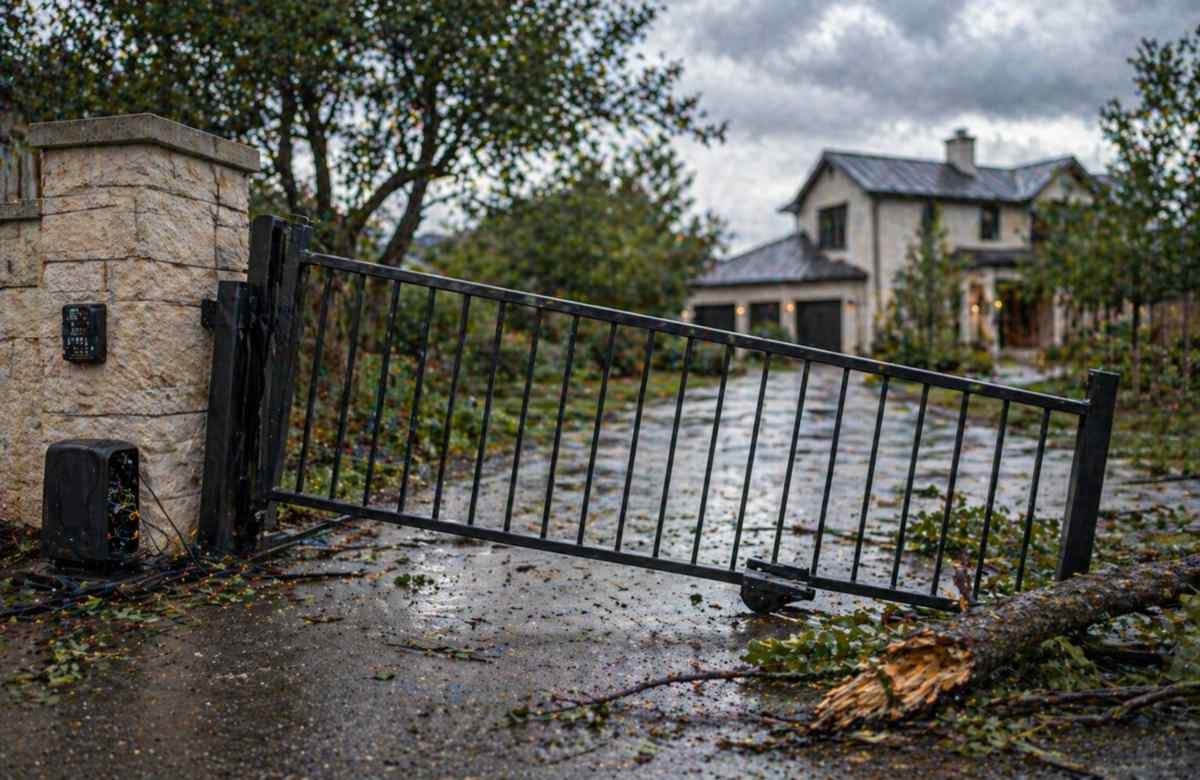

A severe storm can pass through Austin in just a few hours, but the damage it leaves behind can take much longer to discover. While most homeowners immediately notice fallen branches, damaged roofs, or broken fences, one important part of the property is often overlooked: your gate. Whether you have an automatic driveway gate, a sliding gate, or an electric security gate, storms can affect both the visible structure and the hidden mechanical components that keep it operating safely.
Strong winds can bend gate frames or loosen hinges. Heavy rainfall may allow water to reach sensitive electrical components, while hail and flying debris can damage tracks, rollers, and gate panels. In many cases, the gate continues to open and close after the storm, giving homeowners the impression that everything is fine. Unfortunately, hidden damage often reveals itself days or weeks later, turning what could have been a simple repair into a much more expensive problem.
If you’ve discovered a storm-damaged gate, acting quickly is one of the best ways to protect both your property and your investment. A professional inspection can identify problems before they become safety hazards and help restore your gate to proper working condition.
At Austin Gate Repair, we’ve helped homeowners and businesses throughout Austin recover from storm-related gate damage for years. From repairing automatic gate openers damaged by power surges to realigning sliding gates knocked off track by fallen debris, our team understands the unique challenges that Texas weather creates. Whether you need a minor adjustment or complete professional gate repair services, we provide honest recommendations and quality workmanship designed to keep your property secure.
In this guide, we’ll explain how storms affect different types of gates, the warning signs you should never ignore, and how to determine whether your gate needs repair or replacement after severe weather.
How Storms Damage Residential and Commercial Gates
Texas weather is unpredictable. A sunny afternoon can quickly turn into a powerful thunderstorm with heavy rain, strong winds, hail, and lightning. While modern gates are built to withstand daily use and changing weather conditions, extreme storms place far greater stress on gate systems than they are designed to handle.
For residential properties, storm damage often begins with strong wind gusts pushing against large gate panels. Swing gates can be forced beyond their normal operating range, placing excessive pressure on hinges, support arms, and gate posts. Sliding gates face different challenges, as mud, gravel, leaves, and broken branches frequently become lodged inside the track, preventing smooth operation once the storm has passed.
Commercial gates experience similar problems but often on a larger scale. Because these gates are generally heavier and operate more frequently throughout the day, even slight structural movement caused by flooding or strong winds can affect alignment, placing additional strain on motors and opening mechanisms.
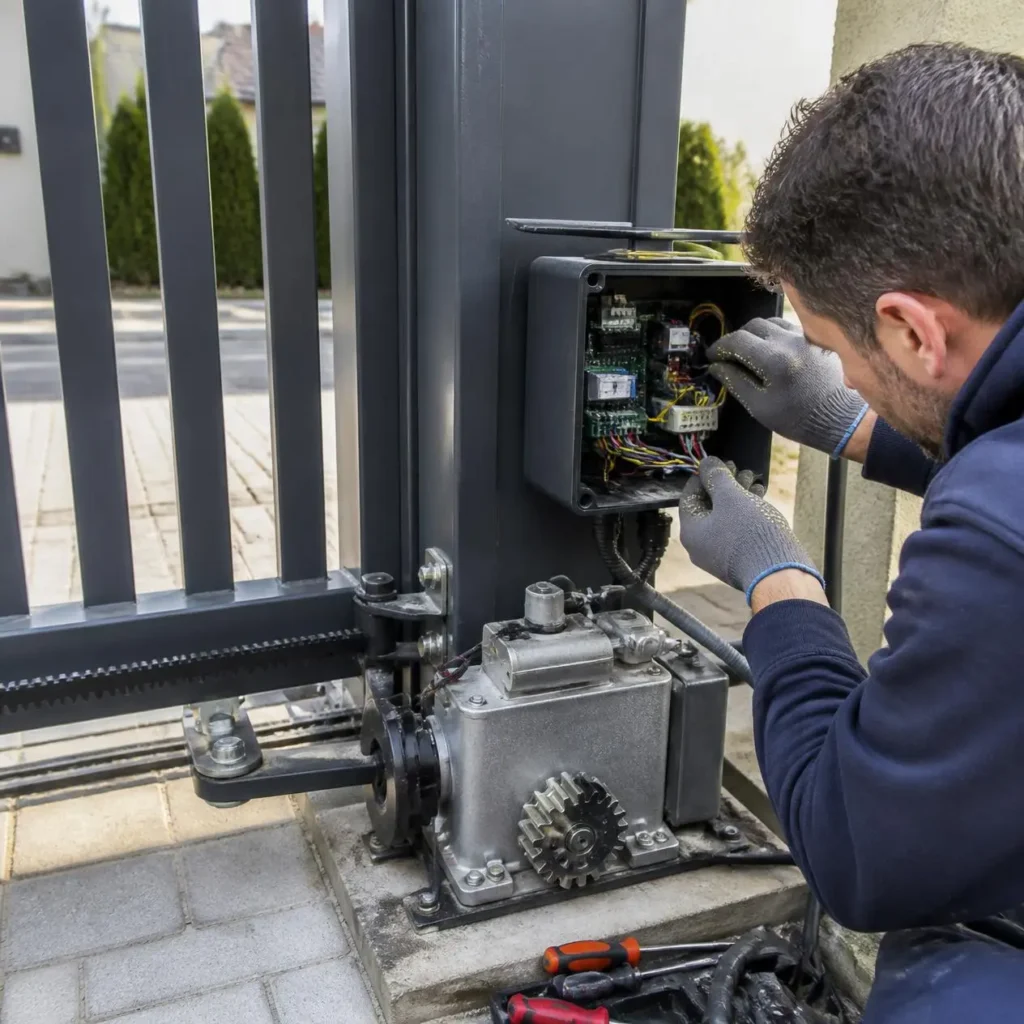
Electrical components are equally vulnerable. Heavy rainfall can allow moisture to enter the control box, while lightning strikes and sudden power surges may damage circuit boards, transformers, safety sensors, and automatic gate openers. These faults are not always visible immediately. In fact, one of the most common situations we encounter is a gate that appears to work normally after a storm but begins developing intermittent electrical problems over the following days.
According to the National Weather Service, severe thunderstorms produce wind gusts of 58 mph (93 km/h) or greater, strong enough to damage trees, fences, and other outdoor structures. In Central Texas, where severe weather events are common throughout the year, gates are regularly exposed to conditions that can compromise both their structural integrity and electrical systems.
Storm damage isn’t always dramatic. Sometimes, the only clue is a gate that sounds slightly noisier than usual or moves more slowly than it did before the storm. These subtle changes often indicate hidden issues that should be inspected before they develop into costly repairs.
What Should You Do After Discovering a Storm-Damaged Gate?
Finding your gate damaged after a storm can be frustrating, especially if it protects your home, family, or business. Your first instinct may be to test whether it still works, but that is often the worst thing you can do.
Instead, begin by assessing the surrounding area. If there are fallen power lines, unstable tree branches, or standing water around the gate opener, keep a safe distance and avoid touching the gate until the area is secure. Water and electricity are a dangerous combination, and attempting to operate an automatic gate under these conditions could create a serious safety risk.
Once you are confident the area is safe, inspect the gate visually without attempting to open or close it. Walk around the entire system and look for obvious signs of damage. A gate that appears slightly uneven, leans to one side, or has visible dents or twisted sections may have suffered structural damage even if it has not completely failed.
Pay particular attention to the hinges, rollers, and track. These components carry the weight of the gate every day, and even a small amount of movement caused by strong winds can affect how smoothly the gate operates. Sliding gates should be checked for debris trapped inside the track, while swing gates should be examined for loose hinges or bent support arms.
Automatic gate systems require additional attention. Check the opener housing for cracks, water intrusion, or impact damage. If the gate fails to respond to the remote control, opens only partially, or produces unusual clicking or grinding sounds, avoid repeatedly pressing the remote. Continuing to operate a damaged opener can increase strain on the motor and turn a relatively minor electrical fault into a much larger repair.
One of the biggest mistakes homeowners make after a storm is forcing a gate that has become stuck. Whether the problem is a bent track, damaged roller, or misaligned frame, forcing the gate to move often causes further damage. What might have been resolved with a simple adjustment can quickly become a failed motor, broken gearbox, or damaged opener.
If you notice anything unusual about the way your gate looks or operates after severe weather, arranging a professional inspection is the safest and most cost-effective next step.
Hidden Storm Damage Most Homeowners Never Notice
One of the biggest misconceptions about storm damage is that every problem is immediately visible. In reality, some of the most expensive repairs we carry out begin with gates that appeared to be working perfectly after a storm.
We’ve inspected gates across Austin that opened and closed normally for several days before suddenly failing. After a closer inspection, the cause was rarely the storm itself; it was the hidden damage left behind. Water had seeped into the control board, a support post had shifted slightly in saturated ground, or a bent hinge was slowly placing extra pressure on the gate opener every time the gate was used.
This is why a visual inspection alone is not always enough. Storms affect far more than the parts you can easily see.
For example, heavy rainfall can soften the soil around gate posts. Even a slight movement in the foundation can throw the entire gate out of alignment. At first, the gate may simply feel heavier to open or close. Over time, however, that extra resistance forces the motor to work harder, increasing wear on the gearbox, rollers, and hinges.
Electrical components are equally vulnerable. Moisture can enter the control box through damaged seals or small cracks that are almost impossible to notice without opening the enclosure. Although the gate may continue operating initially, corrosion gradually develops on electronic components, often causing intermittent faults that become more severe with time.
These hidden issues are exactly why professional inspections are recommended after severe weather. Identifying minor problems early is usually far less expensive than replacing major components later.
The Most Common Storm Damage Repairs We Perform in Austin
Every storm leaves behind a different type of damage, but after repairing gates throughout Austin for years, we’ve noticed the same problems appear again and again. The good news is that many of these issues can be repaired without replacing the entire gate—provided they are addressed before additional damage occurs.
Automatic Gate Repair
Automatic gates rely on several mechanical and electrical components working together. When a storm passes through, heavy rain, lightning, and power surges can interrupt that system in several ways.
A gate that suddenly refuses to respond to the remote control doesn’t always need a new motor. In many cases, the problem lies with a damaged circuit board, faulty safety sensors, or electrical connections affected by moisture. We’ve also seen storms cause voltage spikes that damage electronic control boards while leaving the rest of the system untouched.
Because electrical faults are rarely visible from the outside, diagnosing the issue correctly is the first step toward an effective repair. Our technicians provide professional automatic gate repair, ensuring every electrical and mechanical component is thoroughly inspected before any repairs begin.
Sliding Gate Repair
Sliding gates are particularly susceptible to storm damage because their operation depends on a clean, perfectly aligned track.
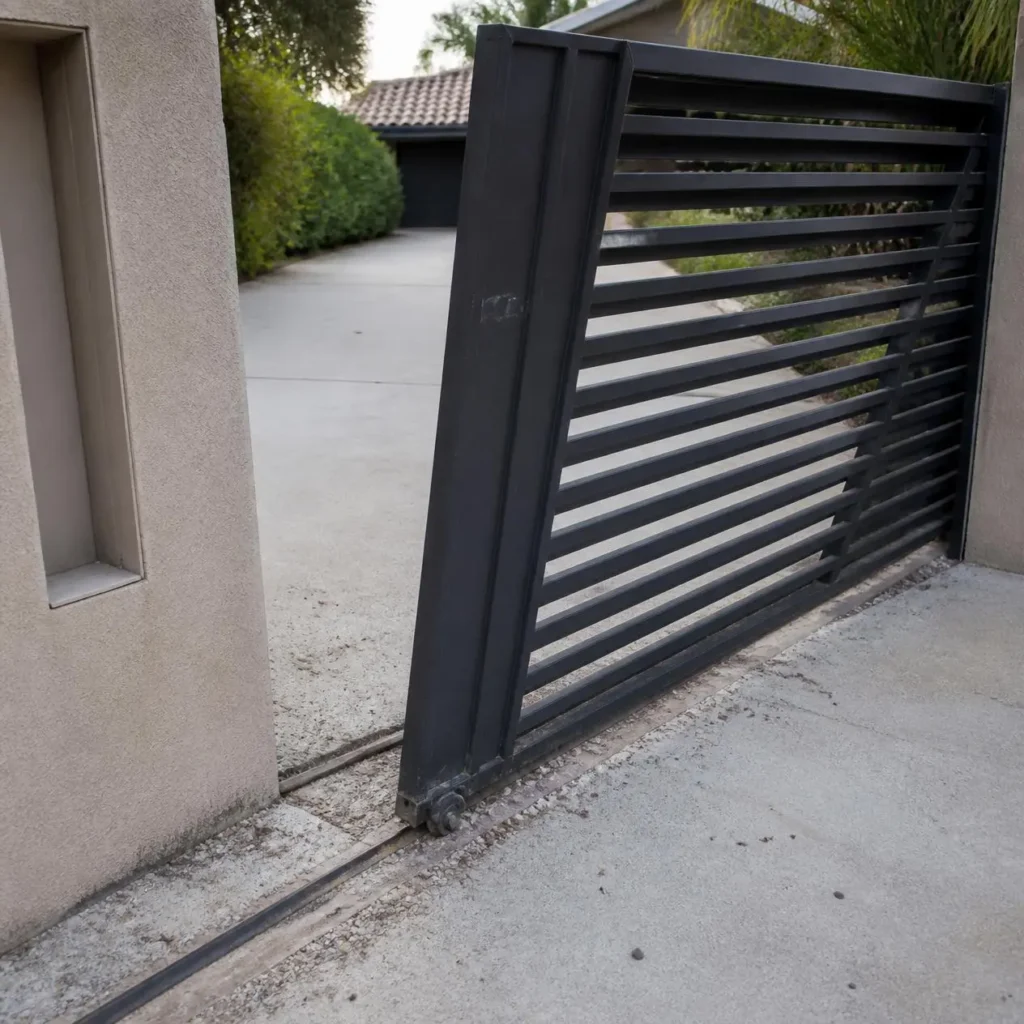
After heavy rain and strong winds, it’s common to find mud, stones, leaves, or broken branches packed inside the track. In more severe cases, falling debris can bend the track or cause the rollers to leave their guides entirely.
Many homeowners attempt to push the gate back into position, believing the obstruction is minor. Unfortunately, forcing the gate often bends the rollers or overloads the motor, creating a much more expensive repair.
Our sliding gate repair services include inspecting the track, rollers, guide brackets, and support wheels to ensure the entire system is properly aligned before the gate is returned to service.
Gate Opener Repair
One of the most overlooked consequences of severe weather is damage to the gate opener itself.
A gate opener contains sensitive electronic components that can be affected by water intrusion, power outages, or lightning strikes. Sometimes homeowners assume the motor has failed when the real issue is a damaged capacitor, control board, receiver, or backup battery.
Rather than replacing the entire system unnecessarily, we carefully diagnose the source of the fault first. This approach often saves homeowners both time and money while extending the life of the existing equipment.
If your gate stopped responding after a storm, our gate opener repair specialists can quickly identify the problem and restore safe, reliable operation.
Structural Gate Repairs
Not every storm damages the electrical system. Sometimes the impact is purely structural.
High winds can twist gate frames, loosen welds, crack support brackets, or shift gate posts out of alignment. These issues might seem minor initially, but continued use places uneven stress on every moving component.
One of the first things our technicians inspect is whether the gate remains square within the opening. A gate that is even slightly out of alignment will wear components much faster than one operating correctly.
Where possible, we repair and reinforce damaged sections rather than recommending unnecessary replacement. However, if the frame has been severely compromised or the repair would not provide a long-term solution, we’ll explain why replacement is the safer and more economical option.
Should You Repair or Replace a Storm-Damaged Gate?
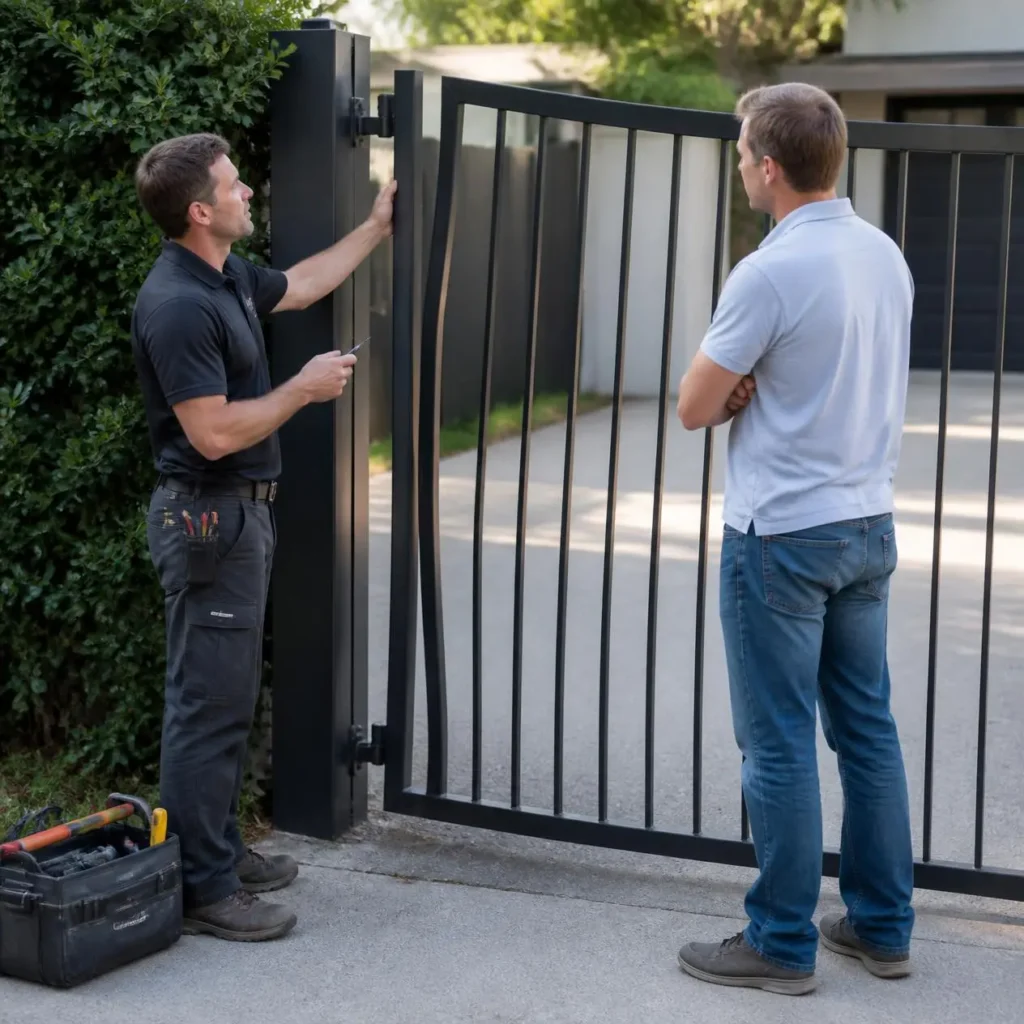
After a major storm, many homeowners assume replacing the gate is their only option. In reality, that’s rarely the case.
Most storm-damaged gates can be successfully repaired when the damage is identified early. Bent hinges, damaged rollers, misaligned tracks, faulty sensors, and electrical problems are all common repairs that can restore the gate to safe operation without replacing the entire system.
Replacement is generally recommended only when the main frame has suffered significant structural damage, multiple major components have failed, or repairing the gate would cost nearly as much as installing a new one.
The table below provides a general guide.
| Repair May Be the Best Option If… | Replacement May Be Better If… |
|---|---|
| The damage is limited to hinges, rollers, or the opener. | The gate frame is severely twisted or cracked. |
| The track can be realigned. | Structural damage affects multiple components. |
| Electrical parts can be replaced individually. | Repairs would exceed the long-term value of the gate. |
| The gate is otherwise in good condition. | The existing gate has reached the end of its service life. |
A professional inspection is the best way to determine which option offers the greatest long-term value. Our goal is always to recommend the most practical solution, not simply the most expensive one.
How to Protect Your Gate Before the Next Storm
While no gate is completely immune to severe weather, regular maintenance can significantly reduce the risk of unexpected breakdowns and expensive repairs. Many of the storm-related issues we see could have been minimised if small problems had been identified earlier.
One of the simplest ways to protect your gate is to keep the surrounding area clear. Overhanging tree branches should be trimmed regularly, especially before storm season, as they are one of the leading causes of impact damage. If you have a sliding gate, keeping the track free from dirt, leaves, and loose gravel will also help prevent obstructions after heavy rain.
Automatic gates benefit from routine inspections as well. Checking the condition of the hinges, rollers, safety sensors, and electrical enclosure allows worn or damaged components to be replaced before severe weather places additional stress on the system. Even something as simple as ensuring the control box is properly sealed can help prevent moisture from damaging sensitive electronics.
Scheduling regular gate maintenance is one of the best ways to extend the life of your gate and reduce the likelihood of emergency repairs. Preventative servicing also helps ensure your gate continues to operate safely throughout the year, regardless of the weather.
Beyond Storms: How Austin Weather Wears Down Your Gate
A single storm is not the only threat. Year-round Austin weather causes slow damage that often shows up after a storm pushes a weak gate over the edge.
| Weather | What it does to a gate | How to prevent it |
|---|---|---|
| Summer heat (100°F+ days) | Motors overheat, metal expands and binds, paint fades and cracks | Shade or vent the opener box, keep hinges lubricated, recoat metal every few years |
| Humidity and rain | Rust on steel and iron, corroded wiring and control boards | Touch up chips quickly, seal the control box, check for water inside after storms |
| Flash floods | Washed-out posts, mud in tracks, water-damaged motors at ground level | Keep tracks clear, raise or seal low-mounted operators, inspect posts after heavy rain |
| Freezes and ice storms | Frozen tracks and arms, drained or failed backup batteries | Do not force a frozen gate; test the battery before winter |
| Lightning and power surges | Burned control boards, dead keypads and receivers | Add a surge protector to the gate’s power supply |
| Sun and moisture on wood | Rot, warping and sagging boards | Seal or stain every 1–2 years; consider a steel-frame wood gate |
A yearly inspection catches most of these problems early. Book gate maintenance in Austin before summer or before winter storms.
Frequently Asked Questions
- Can a storm damage my gate even if it still works?
Yes. Hidden damage is common after severe weather. A gate may continue operating even though the frame has shifted slightly, the track has become misaligned, or moisture has entered the control box. These problems often become more noticeable over time, which is why a professional inspection is recommended after significant storms. - Should I try to open a gate that is stuck after a storm?
No. Forcing a damaged gate can make the problem much worse. A bent track, damaged roller, or weakened hinge may fail if extra pressure is applied. It is safer to leave the gate in its current position until it has been inspected. - Can lightning damage an automatic gate opener?
Yes. Lightning strikes and power surges can damage electronic components such as control boards, motors, receivers, and safety sensors. If your automatic gate stops responding after a storm, the opener should be professionally tested before any parts are replaced. - Does homeowners insurance cover storm-damaged gates?
Many insurance policies provide cover for damage caused by storms, fallen trees, hail, or high winds. Before arranging repairs, take clear photographs of the damage and contact your insurer to understand what your policy covers. - How quickly should a storm-damaged gate be repaired?
As soon as possible. Delaying repairs can allow minor issues to develop into more serious structural or electrical problems. Prompt repairs help maintain your property’s security and can reduce the overall cost of restoring your gate.
Final Thoughts
Storms can damage your gate in ways that aren’t always immediately obvious. While a bent frame or fallen branch is easy to spot, hidden problems such as water-damaged electronics, misaligned tracks, or weakened hinges often go unnoticed until they cause a complete breakdown. Acting quickly after severe weather not only protects your investment but also helps keep your home or business secure.
If your gate has been affected by strong winds, heavy rain, flooding, hail, or storm debris, don’t wait for a small issue to become an expensive repair. A professional inspection can identify hidden damage, restore safe operation, and give you confidence that your gate is ready to withstand everyday use again.
Whether you need emergency repairs, electrical diagnostics, track realignment, or a complete system assessment, the team at Austin Gate Repair has the experience to help.
If you’ve discovered a storm-damaged gate, contact Austin Gate Repair today for a free estimate and fast, professional service. We’ll inspect the damage, explain your options clearly, and get your gate back to operating safely as quickly as possible.