
Why Your Automatic Driveway Gate Is Failing — Repair Guide
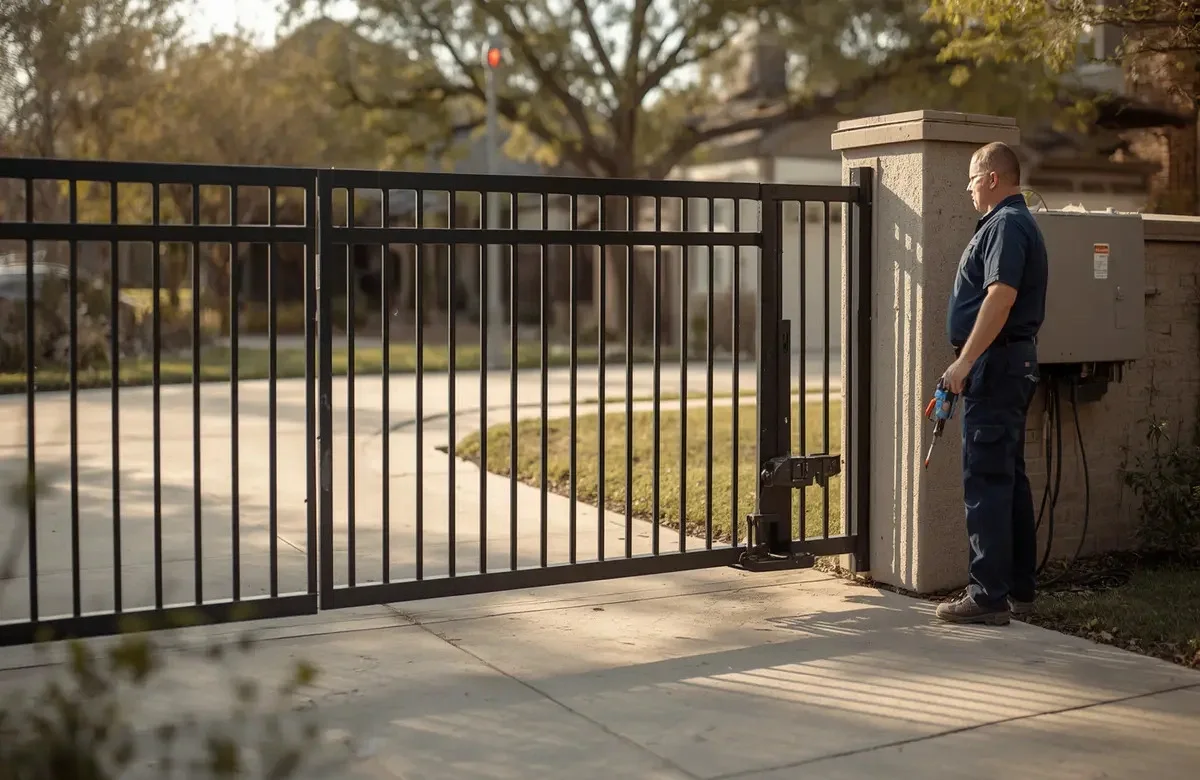

If your automatic driveway gate has stopped opening, closes halfway, or just won’t respond to the remote anymore, the most common causes are a worn-out motor, a misaligned sensor, a dead or damaged power source, or a buildup of debris in the track — and most of these problems can be fixed with a proper automatic gate repair instead of a full replacement.
At Austin Gate Repair, we’ve spent more than five years diagnosing and fixing exactly these issues for homeowners and businesses across Austin, TX, and in almost every case, the gate can be brought back to full working order in a single visit. This guide walks you through why automatic driveway gates fail, what you can check yourself, and when it’s time to bring in a professional for automatic driveway gate repair.
Common Signs You Need Automatic Driveway Gate Repair
Most gate problems don’t appear out of nowhere. They build up gradually, and catching the early warning signs can save you from a complete breakdown — and a much bigger repair bill.
The Gate Moves Slowly or Stops Halfway
It’s probably the number one thing people are typing into Google when they search automatic driveway gate repair near me. If your gate used to glide open without a second thought and now it’s crawling, stuttering, or just giving up halfway through — that’s not random. Usually, it’s one of three things: the motor’s fighting worn-out gears, something’s sitting in the track, or the rollers have worn down to the point where they’re creating friction instead of rolling smoothly. And here’s the thing — ignore it long enough, and a slow gate doesn’t stay slow. It stops.
The Remote Works Sometimes, But Not Always
Intermittent remote response is a classic symptom of either a weak battery, a damaged antenna, signal interference, or a wiring fault somewhere between the receiver and the motor. It’s tempting to just keep pressing the button, but inconsistent signal issues are usually a sign of automatic driveway gate repair service near me being needed sooner rather than later — because intermittent problems tend to become permanent ones.
Unusual Noises During Operation
Grinding, clicking, or loud humming during the open/close cycle is rarely just cosmetic. It usually means a part is under more strain than it should be — often the motor, the chain, or the rollers. If you’ve noticed your gate getting louder over the past few weeks, that’s worth getting checked before it becomes a full motor replacement.
The Gate Doesn’t Close All the Way
If a gate isn’t fully closing, it’s not just a small issue — it’s actually a security concern. Most of the time, it comes down to something simple like a misaligned photo-eye sensor (the part that stops the gate from closing on anything in its way), worn-out track alignment, or sometimes a glitch in the control board software. Whatever the reason, we usually treat this as urgent when customers call for automatic driveway gate repair.
Visible Wear, Rust, or Physical Damage
A storm rolling through, somebody’s bumper clipping it by accident, or just plain old Texas sun beating down on it year after year — any of that can leave cracks, rust, or warping on your gate or its hardware. And here’s what people miss: even if it’s still opening and closing fine right now, that visible damage is usually a sign something’s already going wrong underneath the surface.
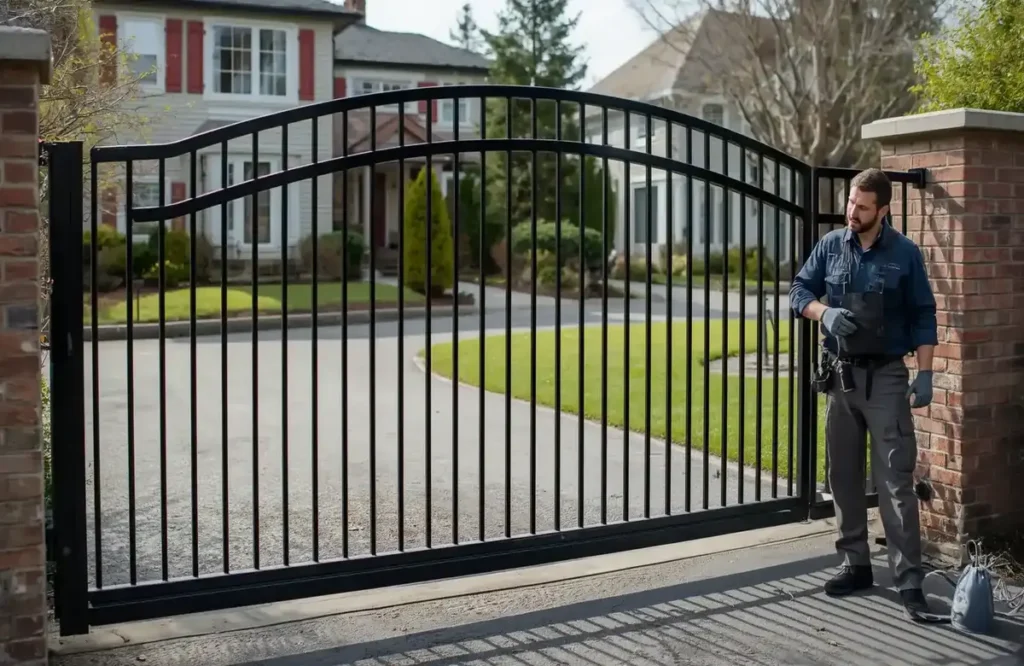
What Causes Automatic Driveway Gates to Fail?
Understanding the root cause helps you make a more informed decision about repair versus replacement — and helps you avoid the same issue coming back.
Motor Wear and Strain
The motor is the heart of any automatic gate system, and like any motor, it has a working lifespan. Constant use, lack of lubrication, or running the gate against an obstruction repeatedly all shorten that lifespan. Motor strain is one of the leading reasons people need automatic driveway gate repair, and in many cases, the motor itself can be repaired or rebuilt rather than replaced outright — which keeps your costs down.
Sensor Misalignment
Modern gates use photo-eye sensors and sometimes pressure sensors to detect obstructions and prevent accidents. These sensors can shift out of alignment from vibration, impact, or simply settling over time. A misaligned sensor can cause a gate to refuse to close, reverse unexpectedly, or behave erratically — and it’s often one of the quicker fixes in automatic driveway gate repair, since it’s usually a recalibration rather than a part replacement.
Electrical and Wiring Issues
Buried or exposed wiring connecting your gate to its power source and control panel can degrade over time, especially with Austin’s heat cycles and moisture from storms. A damaged wire, a blown fuse, or a failing transformer can all stop a gate cold. Electrical diagnostics are a core part of any thorough automatic driveway gate repair, since these issues aren’t always visible from the outside.
Track and Roller Obstruction
For sliding gates, especially, dirt, leaves, gravel, and general debris build up in the track over months of use. Combined with worn rollers, this creates friction that the motor has to fight against — accelerating wear on every other component in the system. Routine gate maintenance goes a long way toward preventing this particular cause of failure.
Power Supply Problems
If your gate runs on a battery backup or solar power, a weak battery or poor charging from the solar panel can leave it running low on power. Most of the time, it works fine in the morning, but later in the day, it starts slowing down or struggling a bit. Sometimes after a power cut, the backup just doesn’t hold up anymore because the battery has simply worn out.
DIY Checks Before Calling for Automatic Driveway Gate Repair
There are a few things worth checking before you pick up the phone — not because we don’t want your call, but because some issues genuinely are quick fixes.
First, check the obvious: is the remote battery fresh? Is the gate’s power source (outlet, breaker, or battery) actually supplying power? Second, visually inspect the track or swing path for obstructions — branches, rocks, toys, or built-up dirt can all stop a gate that’s otherwise mechanically fine. Third, look at the photo-eye sensors near the base of the gate; if they’re visibly dirty, misaligned, or one has a blinking light pattern different from the other, a simple cleaning or realignment might solve the problem.
If that doesn’t fix the issue, it’s usually best to bring in a professional. Gates are a mix of mechanical, electrical, and safety systems all working together, so guessing with repairs—especially around the motor or wiring—can easily make things worse or even create a safety risk.
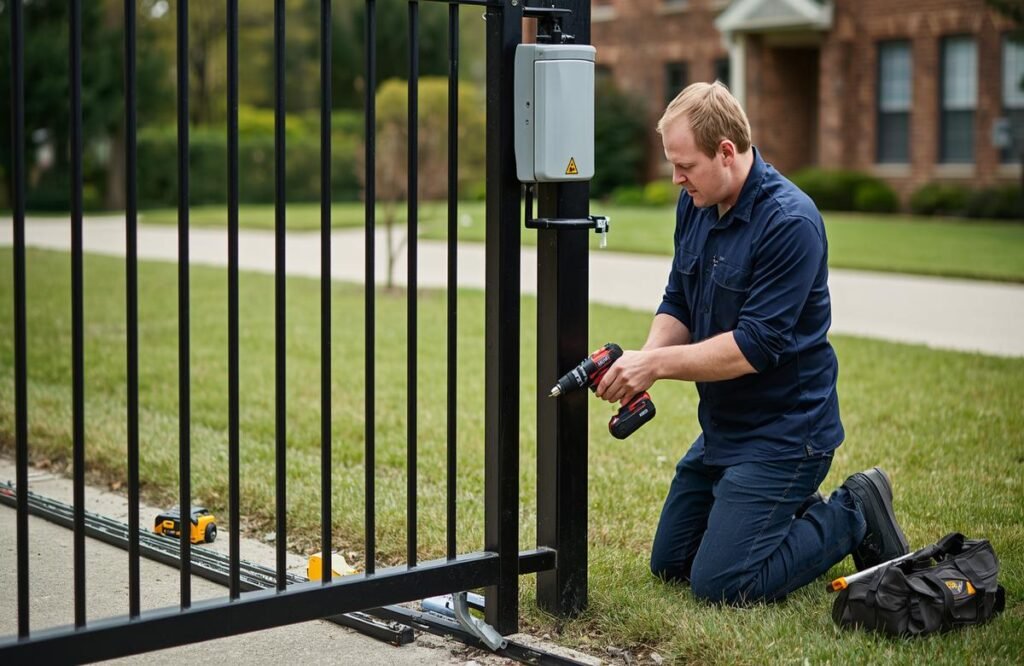
Why Choose Austin Gate Repair for Automatic Driveway Gate Repair
We’ve built our reputation in Austin, TX, on showing up when we say we will and actually fixing the problem on the first visit. Here’s what that actually looks like in real situations.
Same-Day Problem Diagnosis and Repair
A broken gate is a security gap, and we treat it that way. Most automatic driveway gate repair calls in the Austin area can be scheduled for same-day or next-day service, and most repairs are completed in a single visit.
Experienced, Licensed Technicians
Every technician on our team has hands-on experience with the full range of gate systems — swing, sliding, electric, and solar-powered — so whatever brand or setup you have, we’ve likely already seen and fixed the exact issue you’re dealing with.
Transparent, Upfront Pricing
We inspect the gate, explain exactly what’s wrong, and provide a clear written estimate before any work starts. No surprise add-ons once the job is underway
We Handle the Whole System
Beyond the gate itself, our team also provides gate opener repair for the motors and control systems that drive your gate, since opener issues and gate issues often go hand-in-hand. Most of the time, the issue turns out to be with the opener rather than the gate structure itself, we can take care of both without bringing in a second company.
How Often Should You Schedule Gate Maintenance?
Most automatic driveway gate repair calls could have been prevented, or at least caught earlier, with routine maintenance. We generally recommend a maintenance check every six months — more often if your gate sees heavy daily use, like at a commercial property or a shared residential driveway. Routine maintenance covers lubrication of moving parts, sensor alignment checks, track cleaning, and a general inspection of wiring and the control board. It’s a fraction of the cost of an emergency repair, and it meaningfully extends the life of your gate system.
Cost Considerations for Automatic Driveway Gate Repair
Repair costs vary depending on what’s actually wrong. A sensor realignment or basic lubrication service is typically the least expensive fix, while motor replacement or major wiring repairs cost more due to parts and labour. The good news is that most issues we see fall into the lower-cost category, especially when they’re caught early rather than after months of strain on the system. We always provide a free on-site estimate before starting any work, so you know the cost upfront rather than guessing.
When Repair Isn’t Enough: Replacement Considerations
In rare cases — usually when a gate is decades old, severely storm-damaged, or has multiple systems failing simultaneously — replacement makes more financial sense than continued repair. A good technician will tell you honestly when you’ve hit that point rather than running up repair costs on a system that’s reached the end of its useful life. If that’s the situation you’re in, we also handle full gate replacement service and new installations, so the transition is handled by the same team that diagnosed the problem.
The global automatic gate market is projected to grow significantly over the coming years, driven by rising demand for home security and smart access systems.
Source: Grand View Research
Final Thoughts
A faulty automatic gate is more than just an inconvenience — it’s really a security and safety issue, and it usually only gets worse the longer you leave it. Whether it’s moving slowly, making strange noises, or has stopped working completely, sorting it out early with proper automatic driveway gate repair almost always costs less than waiting for a full breakdown.
If you’re dealing with any of the issues mentioned in this guide, our team is ready to help. Just get in touch for a free on-site estimate, and we’ll get your gate working properly again.
Frequently Asked Questions
How much to fix an automatic gate?
It varies — depends on gate size, the type of issue (sensor fix vs. motor replacement), and whether it’s mechanical or electrical. That’s why we provide a free on-site estimate instead of a flat number over the phone.
Do I need a permit for an automatic gate?
It really depends on your city and your property. In most cases, standard residential gates don’t need a permit, but there are exceptions. Things like your property line setback, gate height, corner lot rules, HOA requirements, historic district restrictions, or any hardwired electrical work can all need approval. The safest thing to do is just check in with your local building department before you start the installation.
What is the lifespan of an automatic gate?
An automatic gate usually lasts around 10 to 20 years. The gate itself can stay strong for decades if it’s built well, but the automatic parts like the motor and control board don’t last forever. Most of the time, they’ll need some repair or replacement after about 10 to 15 years, depending on how much the gate is used and the conditions it’s exposed to.
How to troubleshoot an automatic gate?
When an electric gate stops working, troubleshooting usually starts with the basics. First, you check the power supply, then test the remote, and finally look for anything blocking the track. It’s also common to inspect the safety photo-eye sensors since they often get dirty or misaligned. In many cases, a simple reset of the system or a quick cleaning of the sensors is enough to get everything working again.