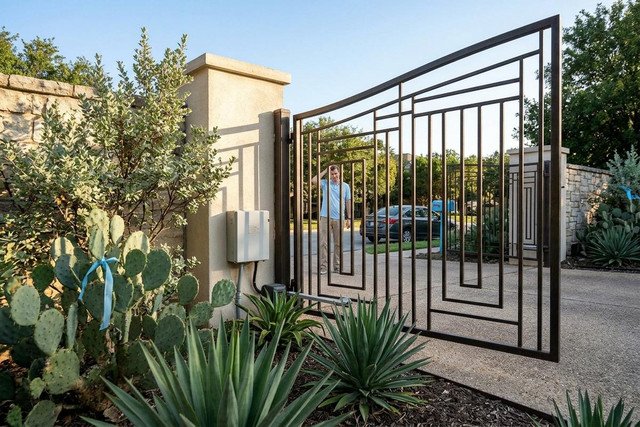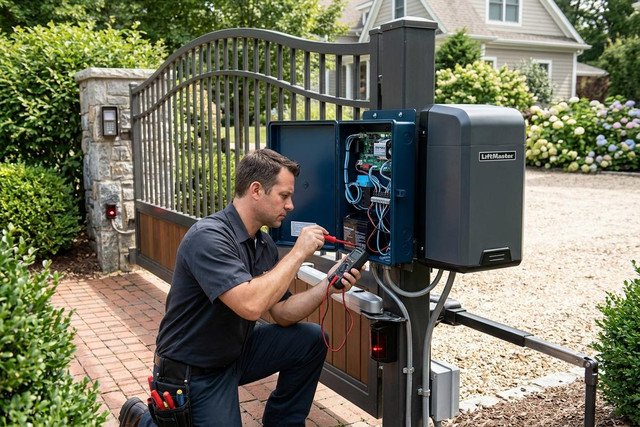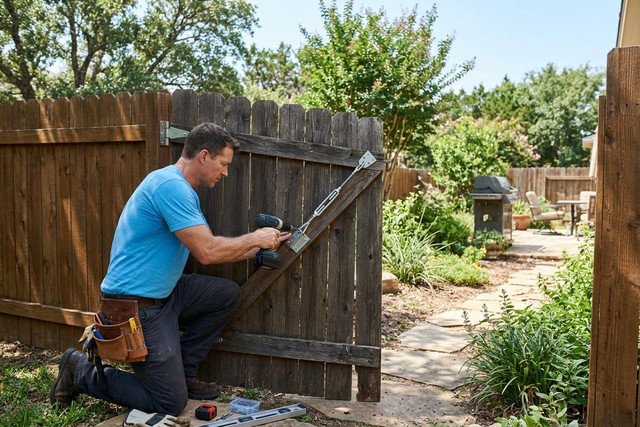
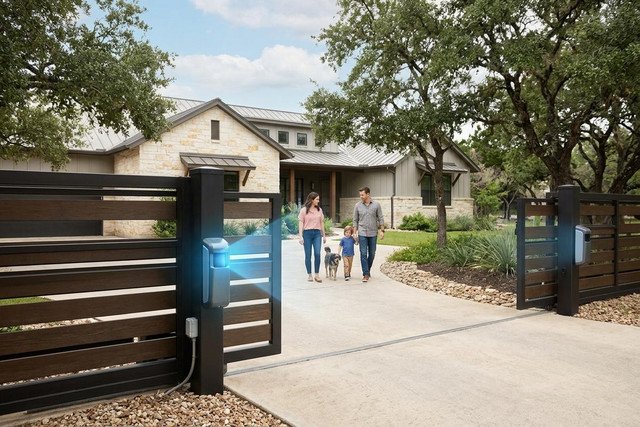
Stop unexpected reversals today with professional gate sensor calibration that restores smooth, safe driveway access in under an hour. If your barrier halts or refuses to close in Austin, TX, our expert team provides prompt automatic gate repair to realign optics and fix damaged wiring. A faulty gate sensor risks vehicle damage and leaves your family exposed, so acting quickly keeps your property secure throughout 2027.
What Are Automatic Gate Sensors and How Do They Work?
An automatic gate sensor monitors your driveway opening to stop moving gates before an impact occurs. These smart safety devices connect straight to your gate operator control board. When an object enters the detection zone, the sensor cuts the circuit instantly. As a result, the motor reverses direction and prevents harm to people, pets, or approaching vehicles.
Most driveway gates use active electrical signals to track movement. If dirt blocks a beam or a wire breaks, the system enters a safe shutdown. This fail-safe setup ensures heavy gates never close blindly on an obstruction. For this reason, checking sensor status lights helps you spot issues before they interrupt your busy morning routine.
Common Types of Gate Opener Sensors for Driveways
Modern properties use multiple detection devices to build complete protection for residential gates. Because one unit cannot cover every blind spot, installers combine optical beams and magnetic fields. This complete solution safeguards wide driveways against sudden accidents. Selecting the correct sensor setup also extends the working range of your entry system.
| Sensor Type | Detection Method | Primary Benefit |
|---|---|---|
| Photo Eye | Infrared light beam | Prevents impact across driveway span |
| Vehicle Loop | Electromagnetic field | Hands-free exit and vehicle safety |
| Safety Edge | Physical pressure contact | Immediate stop upon direct touch |
Photo Eye Sensor for Gate Alignment
A photo eye sensor sends an invisible infrared light beam across your driveway entrance. If a car breaks this beam while entering, the gate reverses immediately. However, accurate alignment between the transmitter and receiver is vital. If strong winds knock a bracket loose, the equipment stops working until you adjust the lenses back into place.
Vehicle Loop Detectors and the Gate Exit Sensor
Ground loops detect metal by tracking shifts in a buried magnetic field. An interior gate exit sensor opens the gate automatically when your car approaches from inside. Safety loops keep the gate open while your vehicle pauses directly over the driveway threshold. Because these loops sit beneath concrete or asphalt, weather elements rarely disrupt their performance.
Electric Gate Safety Sensors and UL 325 Standards
Safety edges use flexible rubber strips mounted right along the leading edge of moving gates. When the strip touches an object, an internal switch triggers an immediate stop. Current UL 325 safety standards require these secondary devices on automated systems. For this reason, certified technicians install monitored contact edges on every modern residential gate.
Signs Your Gate Sensor Is Failing in Austin, TX
Gate sensor problems show clear warning signs before the entire system stops running. If your gate starts closing and then reverses for no reason, dirty optics are often the cause. Also, rapid blinking LEDs on the sensor body signal low signal strength. Review this quick checklist to pinpoint common sensor faults around your driveway:
- The gate opens normally but refuses to close automatically.
- The operator motor beeps repeatedly when initiating a cycle.
- Sensor indicator lights flash rapidly or shut off completely.
- The gate reverses midway through its travel without any physical blockage.
- Physical brackets show rust, loose screws, or impact damage from vehicles.
Ignoring these warning signs leads to bigger electrical issues over time. For example, damaged wiring can short out the primary logic board. If your system ignores keypad commands, check our guide on why your gate not opening persists before attempting any mechanical teardown.
How to Check and Clean Photo Eyes
Cleaning optical sensors takes only ten minutes and prevents annoying false triggers. First, inspect both sensor housings for spiderwebs, dried mud, and dust. Next, wipe the front lenses gently using a soft microfiber cloth and mild glass cleaner. Avoid harsh chemical sprays because abrasive liquids can cloud the sensitive plastic cover.
After cleaning, check that the alignment bracket remains firmly secured to the post. If the indicator light still flickers, loosen the mounting screw and rotate the unit until the LED shines steadily. Learning how to fix gate safely protects your equipment and prevents costly emergency calls.
Maintaining Your Driveway Safety Devices in the Central Texas Climate
The humid Austin weather creates unique challenges for sensitive outdoor electronics. Heavy rainfall can force moisture past worn rubber gaskets and corrode internal circuits. Also, high summer heat expands metal brackets and throws photo eyes out of line. For this reason, inspecting external seals each spring keeps water away from delicate terminals.
Pest activity is another common issue across Central Texas properties. Tiny fire ants and spiders often crawl inside warm sensor housings and block optical beams. Adding our complete gate maintenance checklist to your seasonal home routine helps you catch insect intrusion before wires corrode during 2027.
When Sensor Problems Need a Professional Technician
Basic cleaning resolves minor glitches, but deeper electrical issues require skilled hands. Buried loop wires damaged by driveway settling need specialised diagnostic meters to locate breaks. If you find chewed cables or burned relays, avoid touching the wiring. Instead, hire an experienced specialist for professional gate repair to protect your warranty.
Internal board failures can mimic sensor errors by sending incorrect shutdown signals. A certified technician tests voltage levels to confirm whether the problem stems from the sensor or the motor board. Addressing these underlying gate opener problems early prevents total gate failure and keeps your entryway operating smoothly.
Frequently Asked Questions
1. Why does my gate sensor keep beeping?
A beeping gate sensor usually signals low battery power in wireless units, dirty optical lenses, or a misaligned beam. First, wipe the sensor face and confirm the LED light stays solid. Then check wire connections for loose terminals.
2. What are common types of gate opener sensors?
The most common devices include infrared photo eyes, buried vehicle loops, and contact safety edges. Each unit serves a specific role to detect obstacles, open gates automatically, and reverse motion to avoid collisions.
3. Can cold weather affect gate sensors?
Yes, freezing temperatures cause condensation, frost, and battery drain that disrupt infrared beams. In Austin, winter dampness can also fog exterior lenses. Simply wiping the optical housing or changing backup batteries restores reliable detection quickly.
4. Can I bypass a gate sensor?
You should only bypass a gate sensor temporarily for testing purposes. Modern automated gates require working safety circuits under UL 325 rules. Operating a gate without functional sensors creates severe safety risks for pedestrians and vehicles.
5. How much does gate sensor repair cost?
Gate sensor repair usually costs between $150 and $450 depending on the issue. Basic realignment and lens cleaning sit at the lower end. However, replacing damaged loop wiring or control boards requires more labor and parts.
If your driveway sensors keep malfunctioning, contact the team at Austin Gate Repair today for prompt gate repair service today in Austin, TX.
Call now for fast, reliable Austin gate repair service today.